Oskar Latu—Pua Latu
Match PointOskar Latu’s bond with his only daughter, Pua Latu, is built from both parental devotion and a drive to control the conditions of her life. He wants her to be happy and to reach the Olympics, but he treats that ambition as a goal he can engineer for her, even through abduction and violence. The relationship’s decisive rupture comes when his attempts to secure Pua’s future culminate in his death and Pua’s grief is followed by a knife attack on Willa Ashford.
Fatherhood and Indulgence
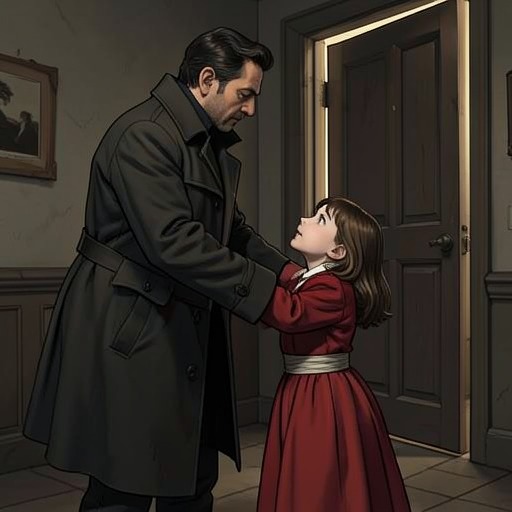
Oskar Latu sees himself as both mother and father to Pua Latu. Her mother, Magda, died during childbirth, and Oskar raised their only daughter alone. His account of that history helps explain the intensity of his attachment, but it does not make his choices protective in any ordinary sense. He indulges Pua extravagantly, giving her a pony when she was seven and a Maserati at sixteen, and the narration suggests he has coddled her to the point of obsession. His affection is real; so is his assumption that he can secure her happiness by arranging the world around her.
That assumption becomes clearest in his response to Pua Latu’s Olympic ambition. When she decides she wants to compete in the Games, Oskar Latu spares no expense. He does not treat the goal as something Pua must pursue through her own sporting development and choices alone. Instead, he takes responsibility for procuring the expertise, training, and competitive circumstances he believes will bring it about. His generosity therefore doubles as a form of direction: he supplies what Pua wants, while placing himself in charge of how she is to obtain it.
The Coach He Obtains for Her
Oskar Latu first seeks what he considers the finest coach in the world. He identifies Willa Ashford and Colleen Sherman as possible choices and invites both to the island, but only Colleen Sherman arrives. Oskar pursues her, and their relationship becomes a passionate affair. He asks her to marry him, imagining that she could become Pua Latu’s mother as well as teach her the game. The proposal joins romantic desire to his plans for his daughter: Colleen is valued as a partner, a substitute mother, and a means of advancing Pua’s volleyball career.
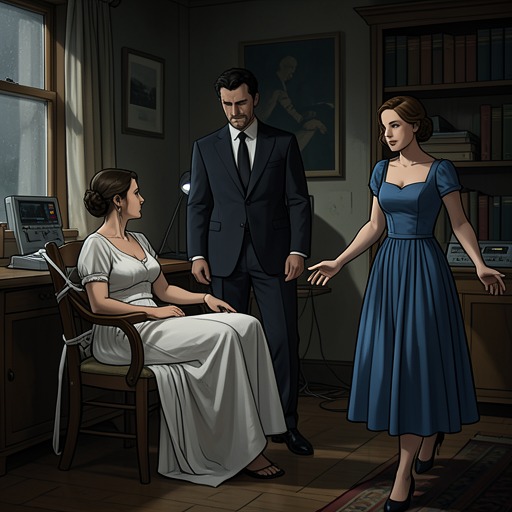
When Colleen Sherman ends the relationship and plans to return to her boyfriend, Oskar Latu refuses to accept her decision. He takes her against her will but continues to make her coach Pua Latu for two years. Pua does not know that Colleen is the source of the expert instruction. Oskar pays another woman an exorbitant fee to receive Colleen’s directions and implement them, concealing the real coach’s role from his daughter. Pua flourishes under that guidance, but her improvement rests on a hidden coercion: Oskar has made Colleen’s expertise available to Pua while denying both women an honest choice about the arrangement.
Oskar Latu surrounds Colleen Sherman’s captivity with expensive comforts, including a well-furnished suite, a computer without internet access, meals from classically trained chefs, and clothes and jewels bought by an employee. He tells himself that this luxurious treatment means he is not a monster. Yet the material privilege does not alter the essential fact that Colleen cannot leave. His care for Pua thus depends on a parallel denial of another person’s freedom, and his paternal ambition makes that denial seem permissible to him.
Olympic Ambition and Escalating Control
The Serenidad International Beach Volleyball Championship gives Oskar Latu’s plans an immediate deadline. As the sand is prepared for the match deciding third place, only that match and the final remain; the tournament winners will qualify for the Olympic Games. Pua Latu and her partner, Sina, are capable competitors, but Oskar believes they cannot beat Willa Ashford. A shoulder injury has hampered Pua for much of the season. Doctors and physical therapists have been engaged, and Oskar believes everything possible has been done to restore her, but he sees the tournament as her last chance to reach the Olympics.
That pressure turns his efforts on Pua Latu’s behalf into an attack on anyone he regards as an obstacle. After learning that Willa Ashford will compete, Oskar arranges to have her eliminated. He does not carry out the violence himself; he employs others and pays generously for their silence. The plan fails, and he is startled to see Willa alive after having believed her dead. He resents that she keeps winning, yet recognizes the scale of her ability, believing she could defeat anyone on the sand, even without a capable partner. His respect for her skill does not restrain him. It sharpens the threat he thinks she poses to Pua’s Olympic hopes.
Oskar Latu’s control also reaches beyond Pua Latu’s immediate performance. He has allowed Willa Ashford and her partner to remain in the tournament, reasoning that it would have been better if they had been eliminated along the way. He imagines Willa might otherwise have been allowed to live. By the time her survival and repeated victories leave him to intervene directly or rely on his men, his supposedly paternal project has become inseparable from lethal violence. The daughter whose happiness he claims to serve is the justification for acts that put other people’s lives at risk.
Death and the Relationship’s Final Image
The relationship ends in the aftermath of a shooting at the tournament. Oskar Latu wrestles a gun from a police officer and shoots Corey Baxter; the other officers return fire. Willa Ashford sees police surrounding Oskar and Pua Latu crying out as she tries to push through to reach him. A spreading pool of blood beneath his motionless body makes clear that she arrives too late. The scene presents the cost of Oskar’s violence not as an abstract consequence but as a daughter struggling to reach her father after the choices he made have become irreversible.
Soon afterward, Willa Ashford looks from the net and stands toward the ocean and says she will not continue playing. With the tournament unfinished, she believes the United States may not receive an Olympic place, and says that even if the Olympic Committee grants a special entry, someone else will have to compete. Pua Latu then charges at Willa with a knife, blaming her and plunging the blade to the hilt. The sequence places Pua’s loss beside the collapse of the Olympic goal around which Oskar had organized her future. Her grief is visible in her attempt to reach her father; her attack redirects blame toward Willa, the opponent Oskar had identified as the obstacle. The story does not resolve Pua’s later course, but the final image exposes how thoroughly her father’s ambition has entangled love, competition, and violence.